How the Dodo Still Shapes the Story of Mauritius
The dodo is extinct, but its story remains closely connected with Mauritius. Learn about the bird, what its disappearance can teach us about island biodiversity, and…
The dodo is extinct, but its story remains closely connected with Mauritius. Learn about the bird, what its disappearance can teach us about island biodiversity, and…
Good to know
No. The dodo is extinct, so any dodo seen today is a reconstruction, illustration, sculpture or cultural symbol. Be cautious of wording or images that could suggest otherwise.
The dodo was endemic to Mauritius, meaning it occurred naturally here and nowhere else. It later became a widely recognised cultural symbol connected with the island’s natural history.
Choose a verified museum or heritage visit for cultural interpretation, or pair a shorter introduction with a nature visit focused on present-day habitats. Confirm current access and displays, keep transfers realistic and remember that any wildlife sightings depend on conditions.
Keep reading
An extinct bird still influences how many travellers first encounter Mauritius. The dodo cannot be seen alive, but its image appears across the island and its history opens a much bigger conversation about nature, culture, extinction and the protection of island habitats.
This guide is for curious travellers who want more than a familiar symbol. It explains what the dodo was, why it is linked so closely with Mauritius and what its disappearance can teach us about biodiversity. It also suggests practical ways to explore the cultural interpretation and nature-focused sides of the story.
Mauritius also has distinctive volcanic geology, living forests and a wider wildlife heritage. The dodo offers one way into that landscape knowledge, but it should not become the whole story. Keep room in the itinerary for present-day habitats, local interpretation and honest discussion of what is known, what is uncertain and how habitats are protected today.
The dodo was a large, flightless bird found naturally only in Mauritius. It belonged to the same broader bird family as pigeons and doves, although its appearance and island way of life were very different from the city pigeons most of us know.
Our understanding comes from several kinds of evidence, including historical descriptions, drawings and physical remains. These sources do not always agree neatly. That is why careful interpretation matters: familiar images of a very round, awkward bird may reflect artistic choices as well as anatomy.
The connection is unusually direct: the dodo was endemic to Mauritius, meaning that it occurred naturally here and nowhere else. Its story is therefore tied to the island’s environmental history rather than simply borrowed as a convenient mascot.
Over time, the bird also became a recognisable symbol of Mauritius. Visitors may notice dodo imagery in official, educational and everyday settings. Some uses invite serious reflection; others are playful or commercial. Seeing both is part of understanding how an extinct animal can move from natural history into shared culture.
Written encounters with the dodo began around the end of the sixteenth century, after people arriving by sea began documenting the bird. It disappeared during the seventeenth century, within a relatively short period of sustained human presence.
Its extinction is associated with a combination of pressures linked to human activity. These include changes to habitat, direct exploitation and animals introduced to the island. Those introduced animals may have affected nests, eggs or food resources. The exact contribution of each pressure should be described carefully rather than reduced to one tidy explanation.
The precise date of the final dodo is not known. Historical records are incomplete, and an animal can become rare long before its last confirmed observation. A thoughtful guide or museum display should explain that uncertainty instead of pretending the historical record is complete.
Island species often evolve within a limited area and under a particular set of ecological conditions. When those conditions change quickly, a species with nowhere else to live may be especially vulnerable. The dodo’s story helps make that principle understandable without turning extinction into an abstract idea.
For travellers, the useful lesson is not simply that Mauritius once had a famous bird. It is that island biodiversity is made of relationships between species, habitats and environmental conditions. Losing one species may also leave questions about the ecological role it once played.
This is also where careful wildlife expectations matter. Any sightings during a forest visit depend on the species present, the conditions and a fair bit of patience. No present-day landscape should be described as dodo habitat without supporting evidence. A better approach is to learn how native habitats function today and why restoration work takes time.

The dodo now lives in culture rather than in the wild. Its outline is instantly recognisable, which helps explain why it appears in public imagery, educational material, art and souvenirs. Yet familiarity can flatten the story. The bird is more than a cheerful logo, and its extinction is more than a punchline.
Travellers can look at dodo imagery with two questions in mind: what is this version trying to communicate, and how closely does it reflect historical or scientific evidence? A museum reconstruction, a civic symbol and a playful shop illustration may all show the same bird for very different reasons.

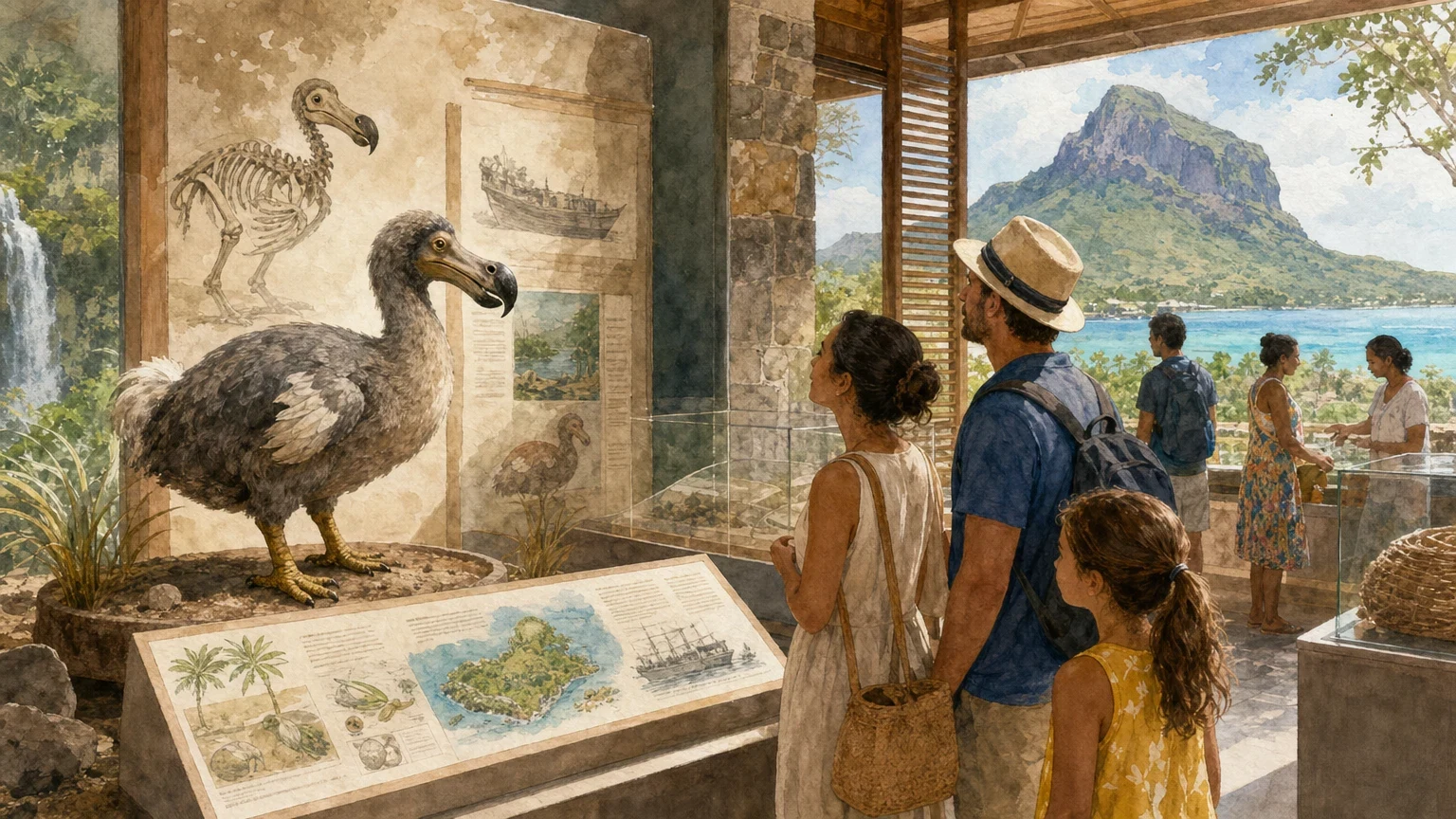
A natural-history collection is usually the clearest place to begin because it can separate physical evidence from later artistic interpretation. The Natural History Museum in Port Louis may fit a dodo-focused cultural day, but confirm its current displays, opening arrangements and accessibility before building the day around it.
For a wider perspective, pair indoor interpretation with a nature visit that explains local habitats and the work taking place at that particular site. The aim is not to find a supposed dodo landscape. It is to understand the pressures faced by island species, the importance of habitat and the practical work involved in looking after biodiversity today.
Families may find that a short museum visit followed by an outdoor stop works better than several hours of displays. Adults with a strong interest in natural history may prefer more time for reading, questions and comparison between historical accounts. Check current access, conditions and suitable venues for the date of travel.
Choose one verified museum or heritage collection as the main visit. Allow enough time to study the evidence rather than rushing past the displays. You can then add a nearby cultural stop, meal or gentle walk, keeping transfers sensible and the day focused.
This approach suits travellers interested in history, visual culture and the way national symbols change over time. It can also work well for mixed-interest groups because it leaves room for another easy activity without turning the day into a lecture marathon.
Start with a short, well-sourced introduction to the dodo, then visit a suitable nature setting where the focus is living Mauritian biodiversity. Ask how the site manages its habitats, which species it aims to protect and what visitors may realistically see under the current conditions.
Possible wildlife sightings depend on the place, season and conditions. The value of the day lies in understanding habitat choices, restoration work and island ecology. This option often fits best within a wider nature itinerary rather than as an isolated attraction.
Andeor Editions
Use our practical guide to choose your bases, space out active days and leave room for nature learning without cramming the trip.
Andeor Editions
Learn how regional choices, group pace and coastal downtime can shape a fuller Mauritius journey.
Begin with the interests and attention span of the people travelling with you. A family with younger children may prefer one clear story, a short display visit and time outdoors. A private group of keen birders, historians or travellers interested in habitat protection may want deeper interpretation and more time for questions.
Check current opening arrangements, journey times, accessibility and the amount of walking involved. If an outdoor visit is included, ask about the terrain and recent conditions. It is usually better to plan one meaningful main visit than to collect several loosely connected stops.
If the dodo is one interest among many, place this day between more active experiences. That gives the group a change of pace and creates a useful bridge between Mauritius’s cultural history and its living landscapes.
The dodo remains memorable partly because its story is simple to recognise but difficult to reduce to a slogan. It was a unique Mauritian bird, its disappearance was connected with rapid environmental change, and parts of its history remain uncertain.
For curious travellers, that uncertainty is not a weakness. It is an invitation to look more closely at evidence, question familiar images and understand why island biodiversity deserves careful attention. The result can be a richer view of Mauritius—one that connects geology, nature, culture, heritage and present-day habitat work.
Andeor Editions
Share the style of journey you want and Andeor can help shape a Mauritius plan around natural history, living biodiversity, local culture or a thoughtful mix of all three.