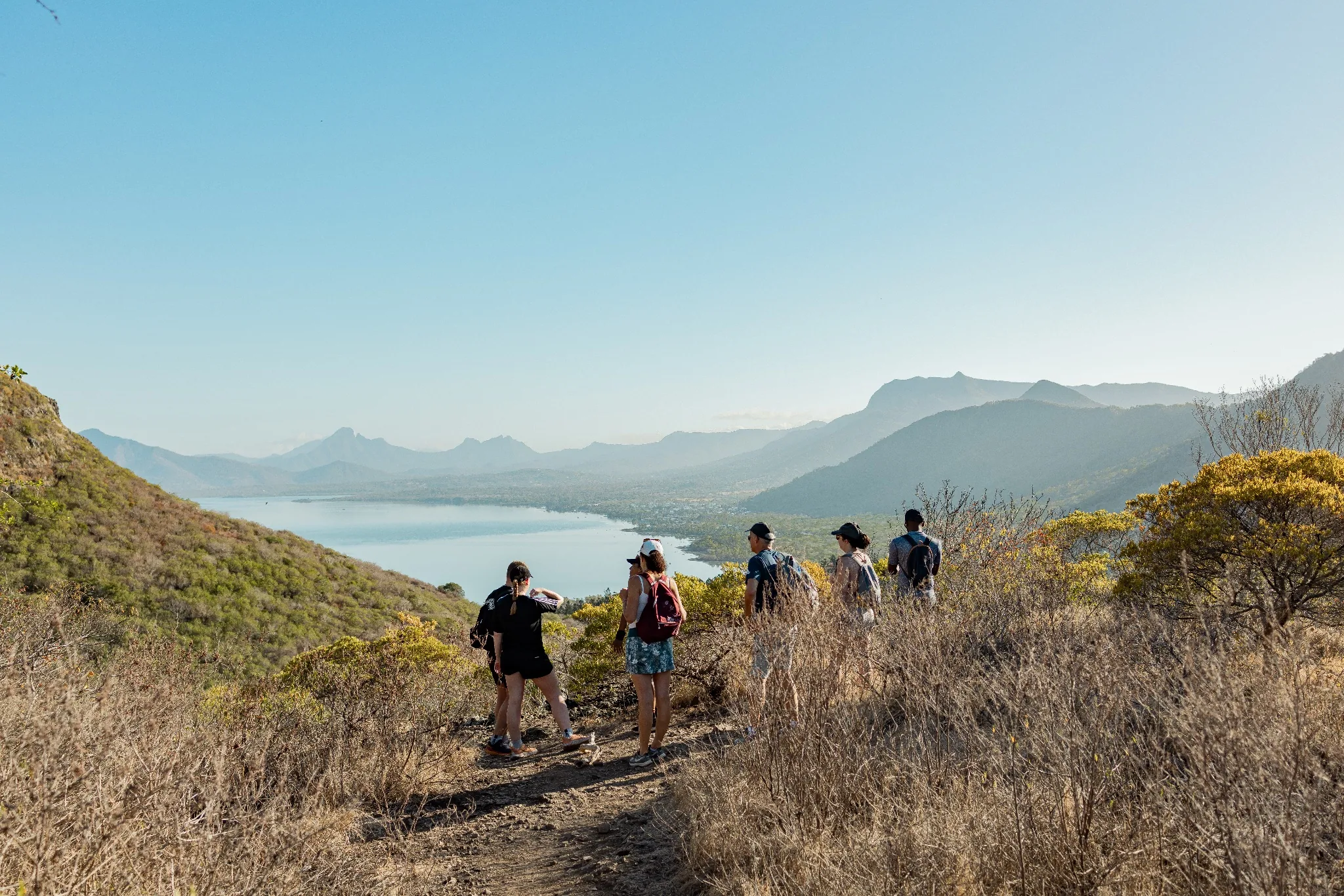
Did you know Mauritius’ mountains tell the story of its volcanic past? A practical guide to hiking in Mauritius
A clear guide to understanding how Mauritius’ volcanic relief shapes its trails, waterfalls and viewpoints, and how to combine hiking, coastline and rest without…
How many days should I set aside if I want to include hiking in Mauritius without rushing?
It depends on the pace you want and how many areas you’d like to explore, but 10 days usually gives you more room to alternate hikes, coastline and downtime. In 7 days, you can still include hiking — ideally by choosing one or two main experiences. With 14 days, the trip has more breathing space and you can adjust your plans around your energy, the weather and what you feel like doing.
Does it make sense to combine Le Morne Brabant and Tamarind Falls in a 7-day trip?
It can make sense if nature is your priority and you’re happy with a fairly active pace. Even so, it’s worth considering transfers, fitness level, heat, terrain type and recovery time. For many 7-day trips, it’s better to combine one more demanding experience with a gentler one rather than overloading the schedule.
How can I balance mountains, coast and downtime in a nature itinerary in Mauritius?
A good rule of thumb is not to schedule all your active days back to back. You can alternate a hike or waterfall visit with an afternoon on the coast, a quieter day or a morning with no alarm. It also helps to stay in areas that reduce transfer times. That way, the trip doesn’t turn into a race from one viewpoint to the next.
Is hiking in Mauritius suitable for families with children or teenagers?
Yes, it can be, as long as the routes and timings are suited to the group’s ages, walking habits and energy levels. It’s important to ask about elevation gain, terrain, heat, duration and alternatives if someone gets tired. For families, gentle walks, viewpoints and flexible-paced nature visits often work very well.
Hiking in Mauritius: mountains, trails and itinerary
When many people think of Mauritius, they picture calm lagoons, pale sand and beach days. And yes, that side exists. But if you lift your gaze a little, the island tells another story: one of mountains, ravines, dark rock, waterfalls and landforms that recall its volcanic origins.
That is why hiking in Mauritius can be a beautiful way to understand the destination in greater depth. It is not about filling the trip with climbs for the sake of climbing, or making an endless checklist of trails. It is about choosing well: which landscape suits your level, how much effort makes sense, when to rest and how to combine mountains and coast without needing a holiday after your holiday.
Mauritius is not just beaches: an island shaped by volcanoes
Mauritius’ relief did not appear by chance. Its mountains, ridges and ravines are tied to a volcanic history that can still be read in the landscape. For travellers, this changes the way you look at the island: a hike is not only a physical activity, it can also be a reading of the terrain.
In some places, you’ll see striking profiles, green slopes dropping towards the coast, exposed rock and valleys where water has carved its way through. Elsewhere, nature feels gentler: paths through vegetation, accessible viewpoints or walks that let you enjoy the surroundings without major physical demands.
That mix is one of the reasons why nature in Mauritius works so well within a tailor-made trip. You can spend a morning walking, slow down by the sea in the afternoon, and discover waterfalls or inland areas on another day. The key is not to treat the island as if every point were five minutes away and every trail were the same. If only, but no.
What changes for travellers who want to hike in Mauritius
Hiking in Mauritius may look simple on a map, but on the ground it pays to be realistic. Distance does not tell the whole story. A short route can feel more intense if there is elevation gain, heat, humidity, rock, roots, mud or sections exposed to the sun.
The pace of your trip matters too. If you are arriving after a long flight, travelling with children or teenagers, if your group has different fitness levels, or if you want to combine hikes with days by the sea, it is better to leave some margin. A beautiful route enjoyed at an easy pace will usually leave a better memory than three activities squeezed in under pressure.
Before choosing a route, it is worth thinking about five things: elevation gain, type of terrain, heat exposure, transfer time and recovery afterwards. That last one is often forgotten. A demanding morning can affect your afternoon plans, especially if there is driving, a booked lunch or more activities scheduled later.
Mountain landscapes that can shape your itinerary
Not all mountain experiences in Mauritius have the same character. Some are more iconic, others more water-focused, others calmer. What matters is choosing according to your trip, not according to a photo you saw for five seconds on social media.
Le Morne Brabant: a mountain with a presence of its own
Le Morne Brabant is one of the most recognisable landscapes in Mauritius. Its silhouette near the coast leads many travellers to include it in a nature itinerary. It can be interesting both for those who want to walk and for those who prefer to see it from a distance, combine it with the coastal area, or give it time with more careful planning.
If the idea is to hike there, it is worth checking the actual level, the heat, the condition of the terrain and whether it makes sense to go accompanied. There is no need to turn the experience into a test of character. The mountain will not be offended if you decide to enjoy it in a gentler way.
Pieter Both: best approached with caution
Pieter Both stands out for its unmistakable shape, but it should not be treated as just any hike. For many travellers, it makes more sense to include it as part of the scenery: viewing it from suitable points, understanding its place in the island’s relief, and not assuming that everything that looks close or photogenic is automatically accessible.
If someone in the group is dreaming of more technical routes, that is where the prior conversation becomes important: real experience, comfort with heights or tricky passages, the day’s conditions and local accompaniment. Caution does not take away from adventure; it usually improves it.
Tamarind Falls: ravines, water and a slower pace
Tamarind Falls offers a different kind of scenery: wetter, greener, with ravines and waterfalls that can significantly change the feel of the hike. It should not be imagined as a simple stop where you get out of the car, take a photo and move on. Depending on the plan, it can be part of a panoramic visit, a guided hike or a more active experience.
Here too, it is important to distinguish clearly between hiking, a walk near waterfalls and more technical activities. They are not all the same, and not all of them suit every traveller. If there are children, people with vertigo, limited experience or a preference for a calm day, this should be mentioned before designing the day.
Gentle trails: the smart choice for many trips
Not every nature day has to be intense. Mauritius also offers gentler walks, accessible viewpoints, natural gardens, coastal stretches and outings where the point is to observe, breathe and not check the time every seven minutes.
These options are especially useful for families, multi-generational trips, relaxed honeymoons or groups with different levels. Sometimes, the best itinerary is not the most ambitious one, but the one everyone can genuinely enjoy.
How to combine mountains, coast and downtime depending on your trip length
A good nature itinerary in Mauritius should not feel like a military schedule. The island is best enjoyed when active days have space around them: reasonable transfers, time to eat without rushing, coastal afternoons and the occasional morning without an alarm.
If you have 7 days
In one week, it is usually best to choose less, but choose well. You can combine one main mountain experience, such as Le Morne Brabant if it suits your level, with a waterfall day or a gentler walk. The rest of the trip should leave room for the coast, downtime and perhaps a cultural or scenic visit without too many changes of base.
Trying to fit Le Morne Brabant, Tamarind Falls, several inland trails and different coastlines into just 7 days may sound exciting on paper, but in practice it can leave little room to truly enjoy the experience. And Mauritius is not a box-ticking exercise.
If you have 10 days
With 10 days, you can spread out the effort more comfortably. A sensible approach is to alternate active days with gentler ones: a mountain hike, a waterfall area, time on the west or south coast, and a day designed purely to slow down. You can also consider staying in more than one area if it reduces transfers and makes the trip feel smoother.
If you have 14 days
With two weeks, the itinerary has room to breathe. You can combine mountains, waterfalls, coast, villages, viewpoints and rest days without every single day needing to justify itself with a major activity. For nature-loving travellers, this extra time makes it easier to adjust the pace, return to an area you loved or swap an active day for rest if your body asks for it.
When it makes sense to go with a local guide
A local guide can offer much more than orientation. They can help read the terrain, adjust the pace, avoid route confusion, explain the landscape and decide whether an option makes sense for the group on that day. This is especially useful on routes with elevation gain, uneven ground, waterfall areas, ravines or sections where previous experience matters.
It is also worth considering if you are travelling as a family, if the group has different levels, if you are unfamiliar with the local climate or if you want to better understand the natural history of the area. It is not about travelling with fear, but about being well accompanied when the plan calls for it.
Before confirming any guided day, ask about the level, approximate duration, type of terrain, expected pace, what to bring, how they adapt to changing conditions and what alternatives exist if the route is not suitable. Good decisions start before you put your walking shoes on.
How An Deor can help you design a nature trip at your own pace
At An Deor, the idea is not to sell you a one-off excursion and leave the rest of the trip to sort itself out. The interesting part is looking at the whole picture: how many days you have, which areas appeal to you, how much you want to walk, each person’s level, how much rest you need and what kind of nature excites you most.
With that information, it is possible to build a nature itinerary in Mauritius that combines mountains, coast, waterfalls and genuine downtime. It may include Le Morne Brabant, views towards Pieter Both, Tamarind Falls or gentler options, but always with one simple question in the background: does this plan feel right for this traveller, this group and this moment?
If the answer is yes, the trip usually flows much better. And if the answer is no, that is fine too: sometimes swapping a climb for a quiet morning by the sea is the wisest decision in the itinerary.
Andeor guidance
Plan the trip at your own pace
Tell us what kind of nature you want to experience in Mauritius, how much you want to walk and who you are travelling with. An Deor can help you shape a balanced itinerary, with mountains, coast and rest in just the right measure for you.